AIRI
A cosy environment, at the right time, in the right place.
A good indoor climate is more than just temperature
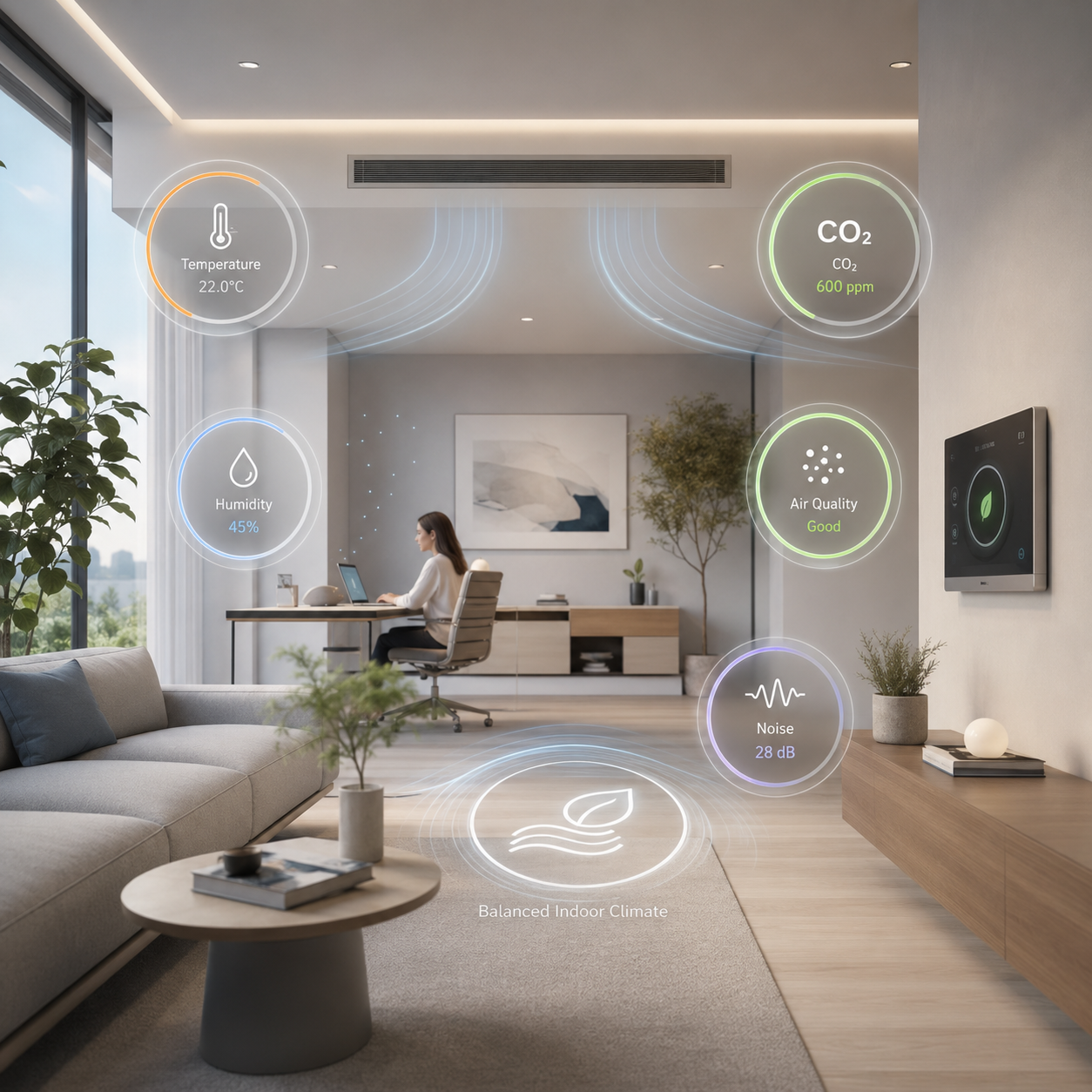
A room's indoor climate is shaped at once by temperature, air humidity, carbon dioxide levels and other air quality indicators. Adjusting just one of these isn't enough, because a comfortable, high-quality indoor climate comes from their combined effect.
Too high or too low a temperature directly affects how people in the room feel. Excess humidity can cause condensation and create conditions for mould to form. Air that's too dry makes being in the room uncomfortable.
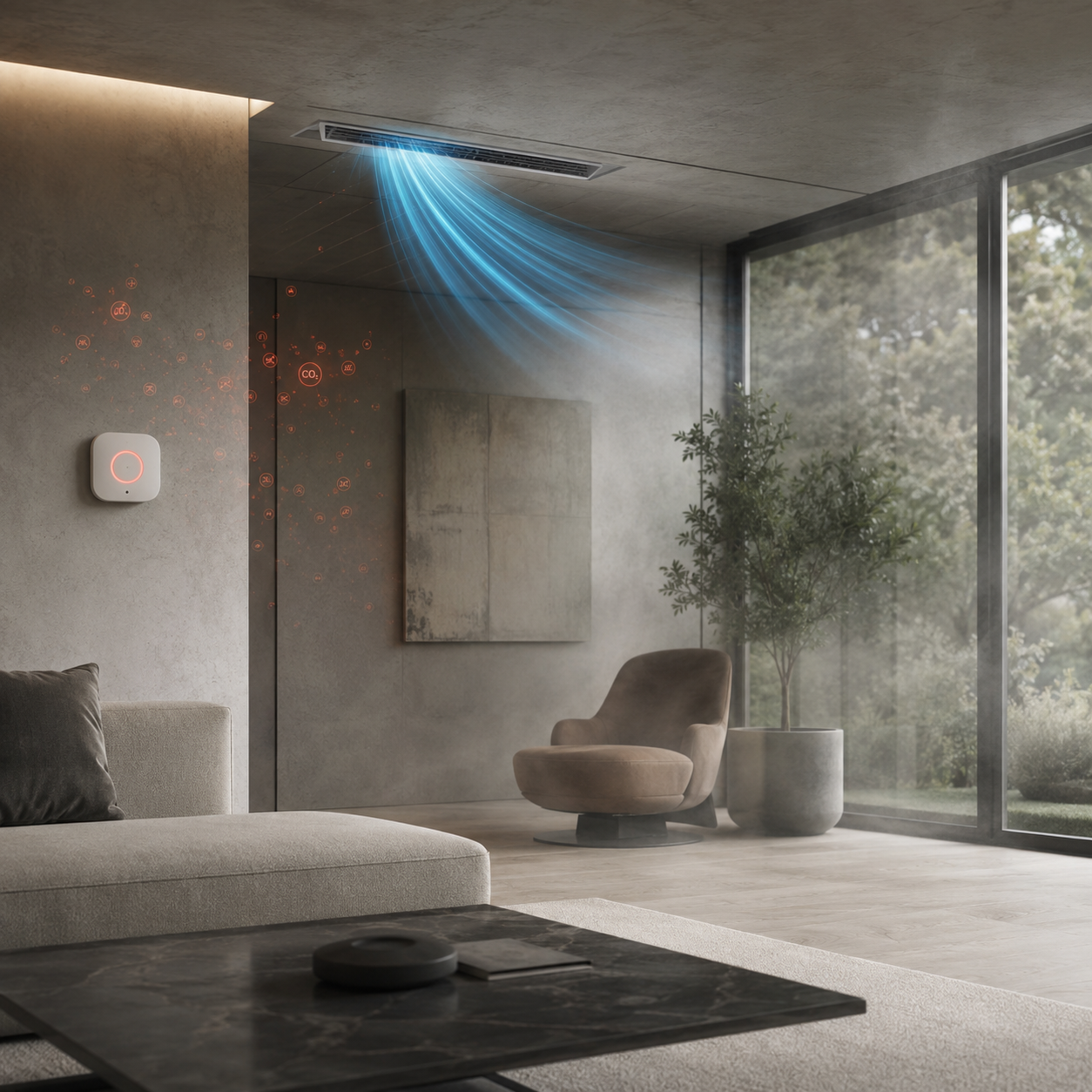
CO₂ levels help gauge how heavily a room is used and whether ventilation is sufficient. They don't, however, describe the full air quality. A room can simultaneously contain dust, volatile compounds, odours and other pollutants that CO₂ measurement alone won't detect.
Noise is also part of the indoor climate. Poor control logic can cause abrupt changes in airflow, disruptive fan noise, or frequent damper movement. A technical system shouldn't become a new problem in the room – its operation should be smooth, quiet and as unnoticeable as possible.
Detecting the problem alone isn't enough
A sensor can quickly notice that a room's temperature, humidity or CO₂ level has changed. The harder task is reacting to that change technically, quickly enough.
A conventional system often controls an entire apartment, floor or larger part of a building at once. If a problem arises in just one room, the system may not be able to direct the necessary amount of air or climate capacity there quickly enough.
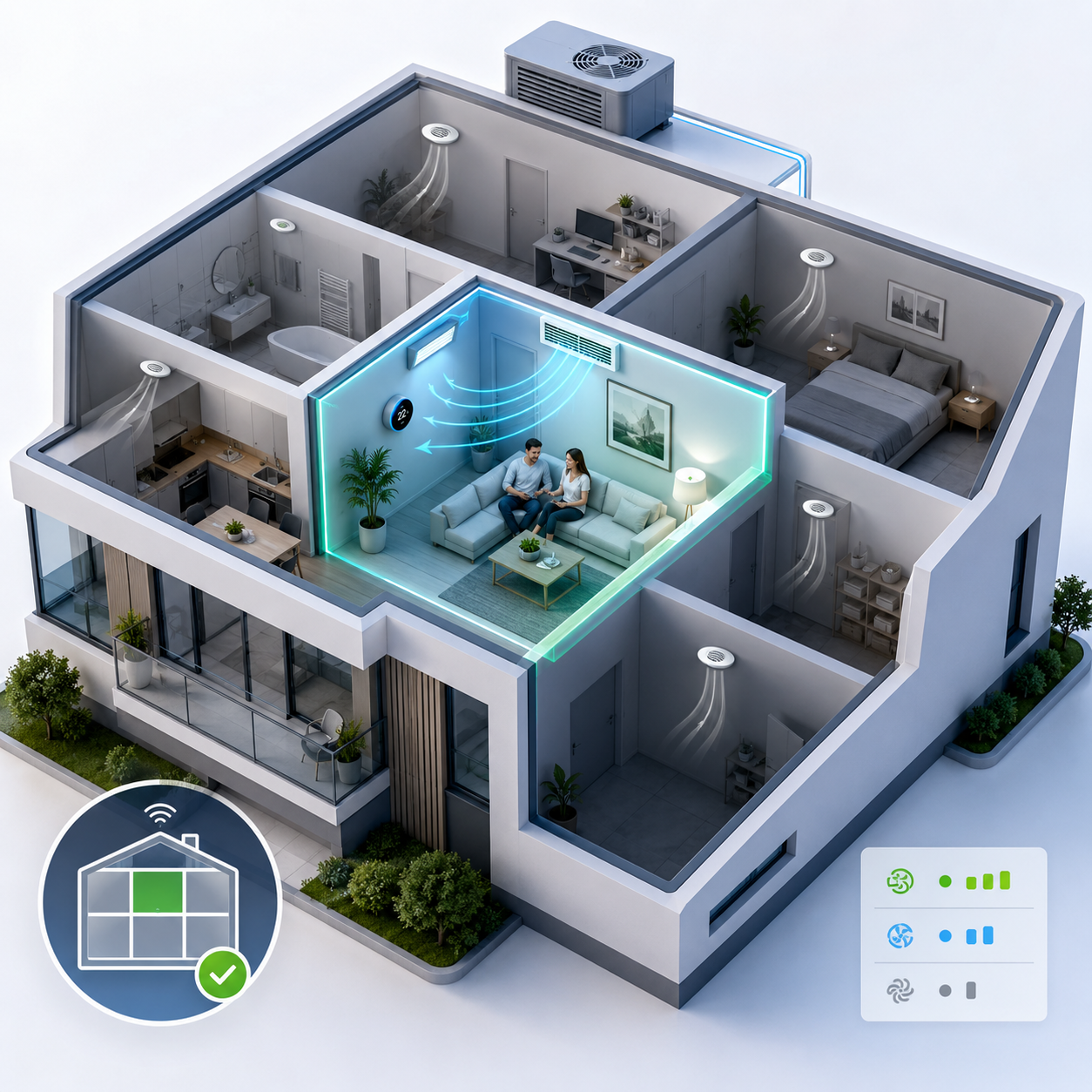
AIRI is designed for room-based control. The system identifies which room the need has arisen in, and makes it possible to direct technical capacity to where it's actually needed.
What matters isn't just greater capacity. What matters is the ability to redistribute existing capacity quickly and precisely. This way, the indoor climate can respond to change before discomfort turns into a lasting problem.
Controlling the whole building wastes energy where it isn't needed
A building's rooms aren't used the same way. Bedrooms may be empty during the day, living space usage changes by the hour, and school or conference rooms may alternate between being completely empty and full of people.
When the indoor climate is controlled only at the level of the whole building or a large zone, meeting the needs of a single room often means heating, cooling or ventilating other rooms too, even where there's no actual need for it.
AIRI creates the ability to focus on a specific room. The system can reduce technical load where rooms aren't in use, and direct the necessary capacity to where people actually are, or where the measured indoor climate calls for it.
Room-based control doesn't mean cutting corners on indoor climate. It means using energy more precisely – at the right time, in the right amount, and in the right room.